





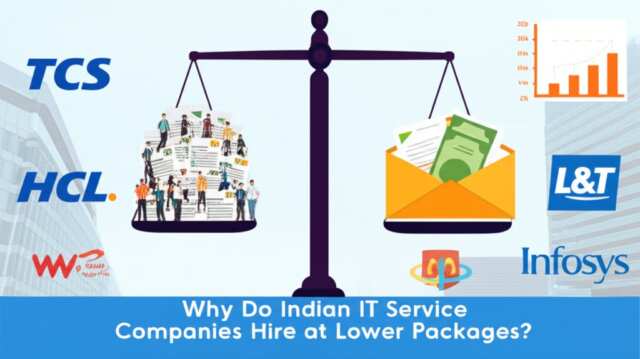
Why Do Indian IT Service Companies Hire at Lower Packages (TCS, HCL, Wipro, Tech Mahindra, Infosys, L&T, etc.)?
Here’s the reality behind it 👇
1. Project-based business model
✅ Service-based IT firms work on client projects/contracts for a fixed duration.
✅ Once a project ends, it may either get extended or shut down.
2. Fixed client billing
✅ Clients usually pay a fixed project fee or hourly rate.
✅ Within this amount, companies must cover all costs — hardware, ODC (Offshore Development Center) expenses, HR & admin costs, office maintenance, etc.
✅ Sometimes clients provide laptops/resources, but only in limited cases.
3. Financial risk of project closures
✅ If a project gets scrapped, hundreds of employees may be released.
✅ The company still has to bear their salaries until they are reallocated to another project.
✅ Employees may sit “on bench” for 3–4 months or more without billability, creating financial strain.
4. To manage this, companies adopt certain practices:
✅ Hire more freshers at lower salaries.
✅ Prefer employees with 3–5 years of experience (cost-effective compared to senior hires).
✅ Offer limited annual hikes (5–8% max).
✅ Avoid keeping employees long on bench — if unallocated, you may be asked to exit.
✅ Some employees even report not receiving laptops until they are staffed on a project.
✅ Risk of job loss is higher if you’re not billable.
👉 In short: Service-based IT companies balance their billing vs. expenses by keeping hiring costs low and controlling salaries. That’s why packages are less attractive compared to product-based firms.
💡 This is the story of Indian service-based IT companies.